
Nile Crocodile
Diving
My journey into Nile crocodile diving began in 2012, when I was invited to film for a Discovery Channel production called The Dragon’s Feast. That assignment became my first true introduction to diving with Nile crocodiles, and it opened the door to one of the most demanding and extraordinary experiences of my life. Since then, I have returned to the Okavango Delta year after year, building a deep respect for the environment, the animals, and the skill required to operate safely in their world.
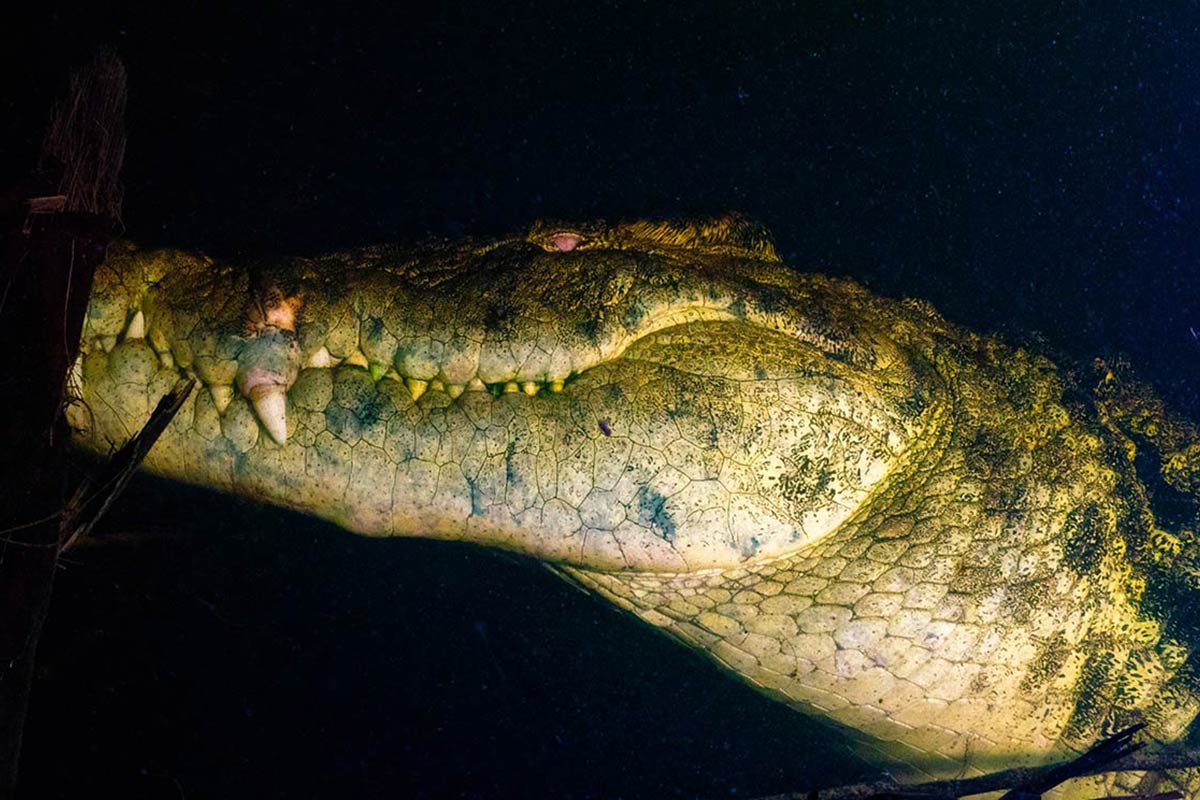
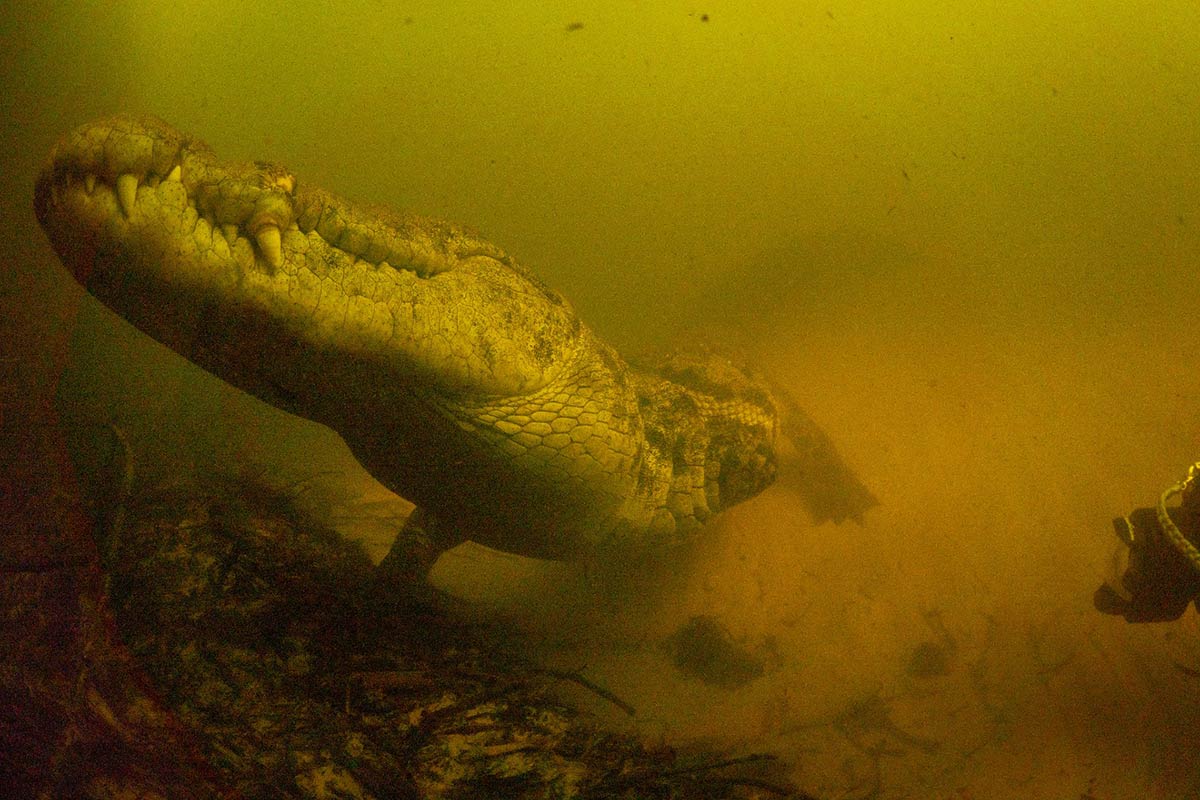
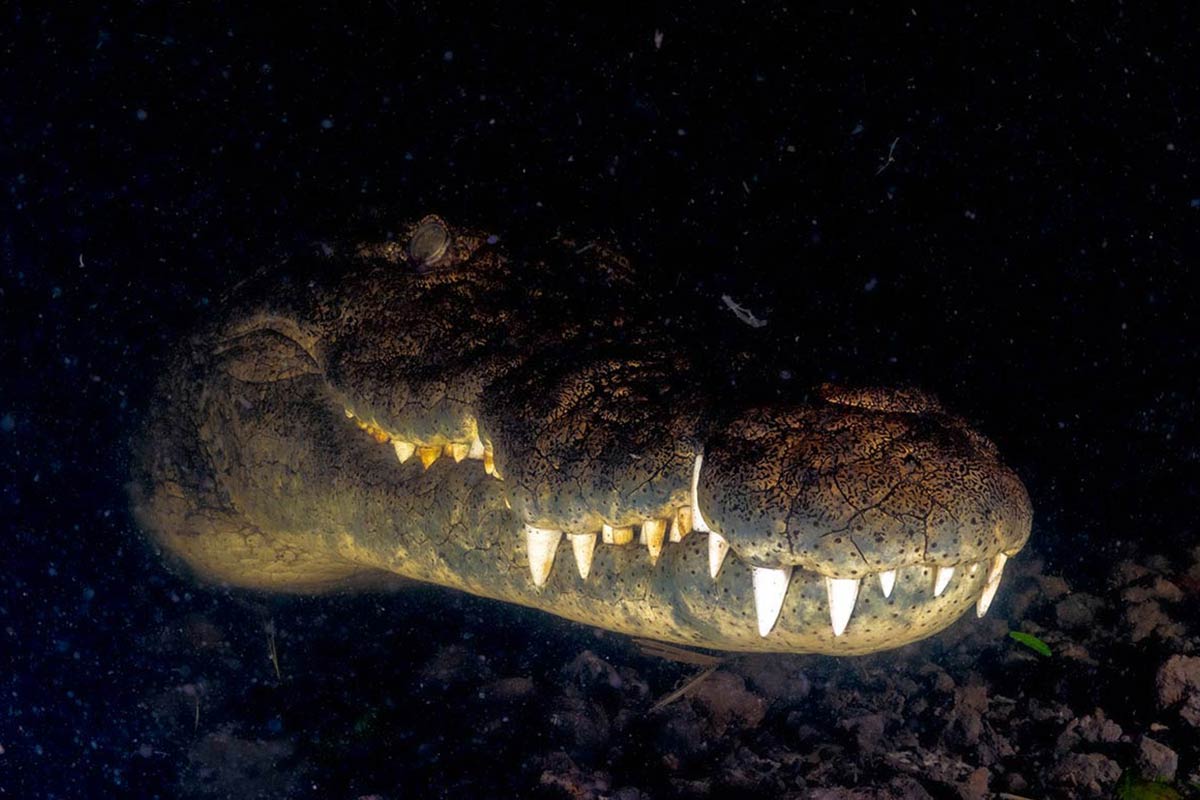
Of all the forms of adventure diving I have done, Nile crocodile diving stands apart as one of the most dangerous. The reason is simple: when you enter the water with a Nile croc, you are dealing with an apex predator for which humans are very much part of the equation. That makes it fundamentally different from many shark encounters, where we are generally not seen as natural prey. In crocodile diving, the stakes are real from the moment you enter the water.
What makes it even more intense is the environment itself. This is not open ocean diving with wide blue water and long sight lines. We are working in a river system with current, low visibility, dead trees, submerged roots, caves, and countless natural obstacles. It is a hostile underwater environment where the diver must remain calm, disciplined, and fully aware at all times. When you combine a powerful predator with a challenging river system, you begin to understand why this type of diving is not for the faint-hearted. It is an experience for highly competent, experienced divers who want to operate at the sharp end of adventure.

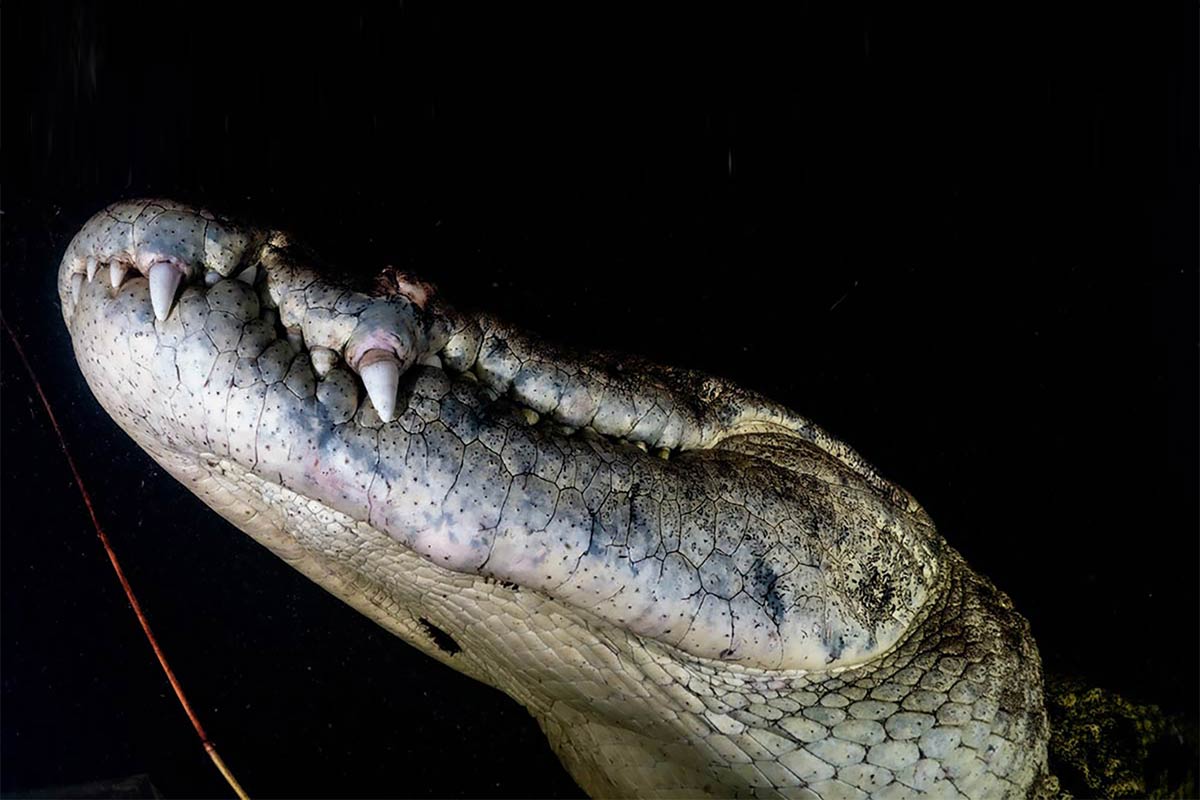
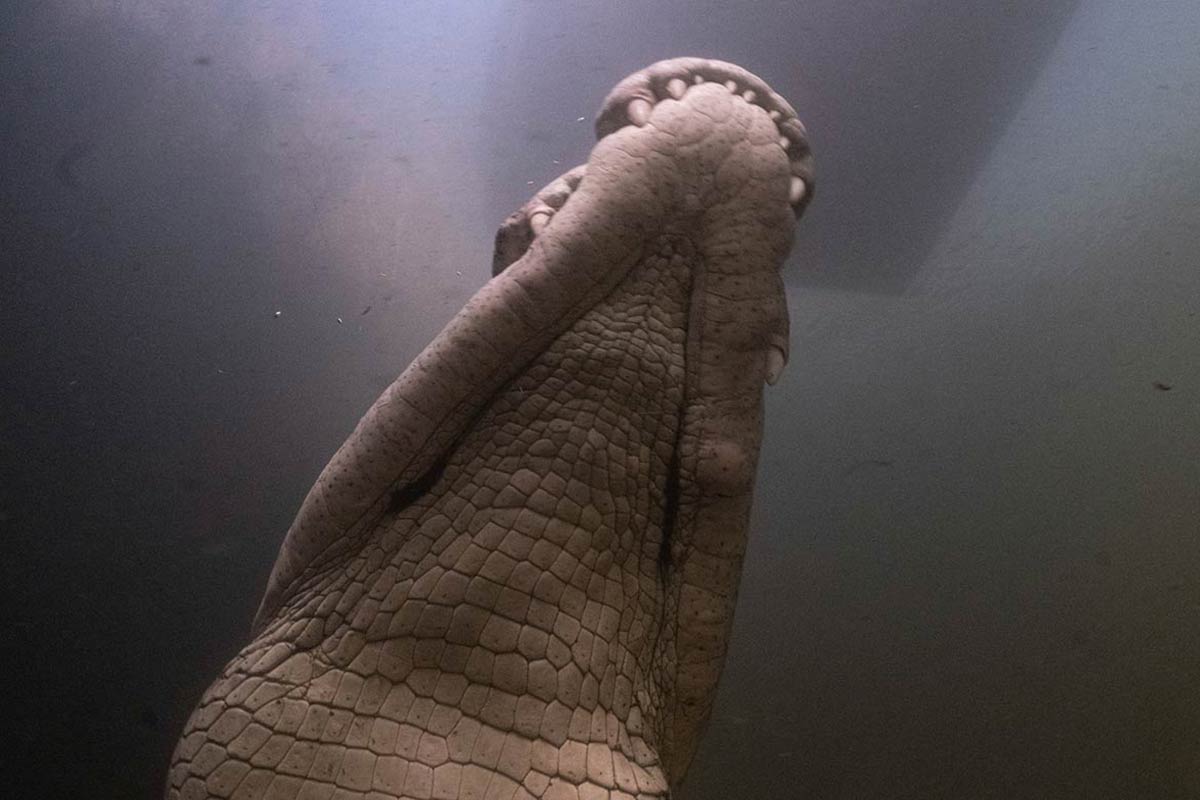
There is only a very small seasonal window when this diving can be done properly. In June and July, rainfall from the Angolan highlands flushes the Okavango system with colder, cleaner water. Water temperatures can drop dramatically, ranging from around 21°C down to 14°C, and night-time temperatures often fall below 10°C. Because Nile crocodiles are reptiles, these colder conditions slow them down considerably. That combination of improved water clarity and reduced crocodile activity gives us the best possible opportunity to dive with these ancient dragons.
One of the most important lessons I teach is that the surface is the trigger zone. Before entering the water, every detail must be checked and confirmed. Air must be on, cylinders must be properly filled, fins must be on, weight belts secured, and buoyancy under control. When we enter, we do so decisively. On the count, we enter and drop straight to the bottom. There is no lingering, no unnecessary splashing, and no confusion on the surface, because disturbance there can trigger a crocodile response.
Once on the bottom, we move toward the side of the river and allow the current to take us downstream into the zone where the crocodile is holding. I teach divers to move with their heads facing downstream, never their fins, because the key is always to see what is ahead of you first. In low visibility, your survival depends on scanning the water directly in front of you before looking anywhere else. The last thing you want is to become distracted by the bank or the papyrus and drift straight into a crocodile at close range.
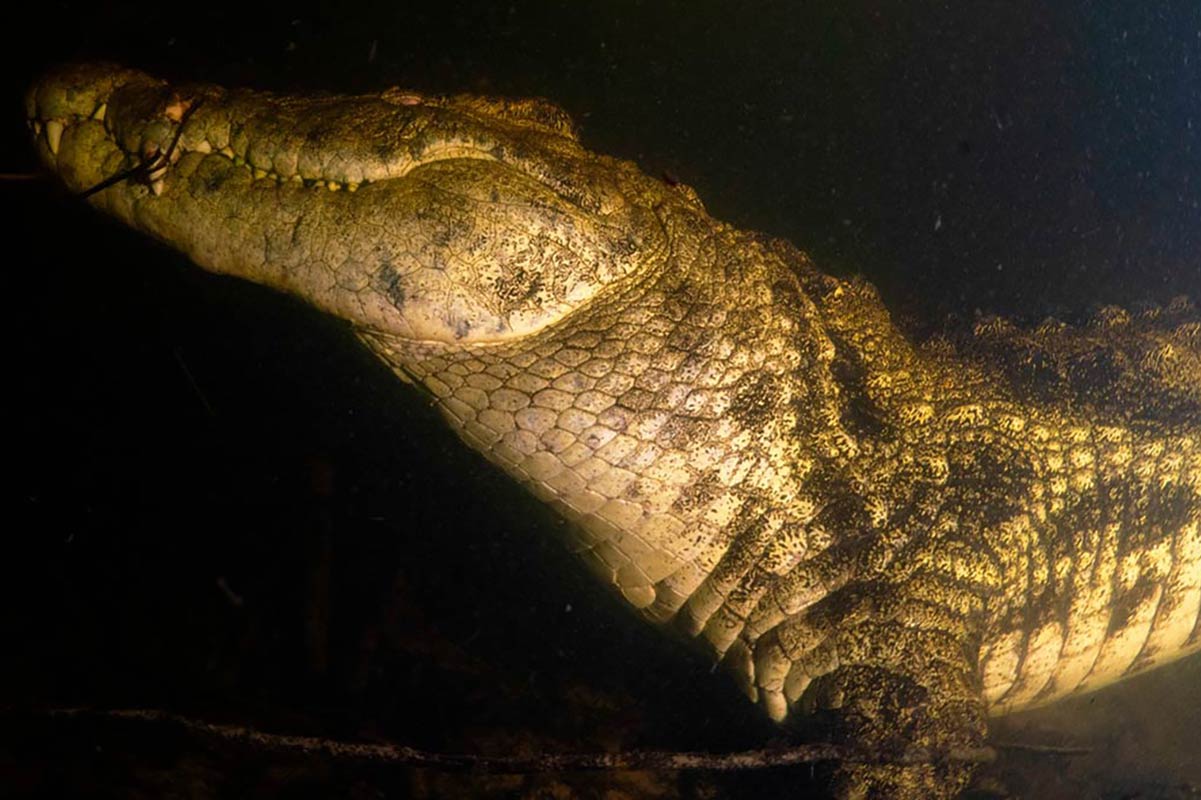
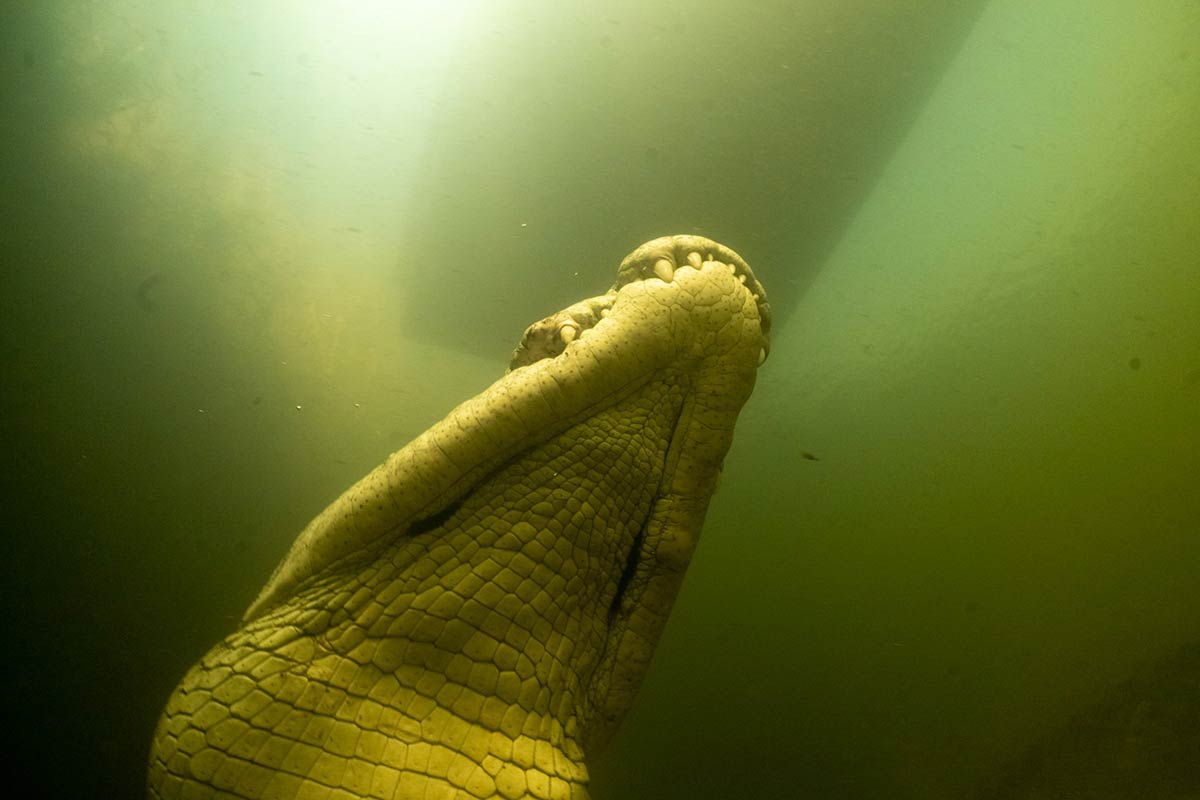
When the crocodile is located, I signal its position and we arrange ourselves carefully downstream of it. This allows us to approach without stirring up silt and debris that would ruin visibility for filming or photography. If the crocodile moves, it will usually go upstream, and then we follow. That can be physically demanding, especially in current, but it is part of the discipline of this dive.
There are strict rules underwater, and they matter. We do not swim over a crocodile, especially not over its head. That can provoke exactly the kind of reaction we do not want, either a defensive strike or an immediate retreat. Instead, we work around the animal wherever possible, or pass over the tail section if necessary, never the head. These details may sound simple, but in this environment they are absolutely critical.
At the end of the encounter, I signal the end of the dive and we move back toward the centre of the river, where the boat comes in for pickup. Even then, the procedure is controlled. We surface one at a time and keep our time on the surface to an absolute minimum. Every step is practiced and deliberate, because in crocodile diving there is no room for casual mistakes.
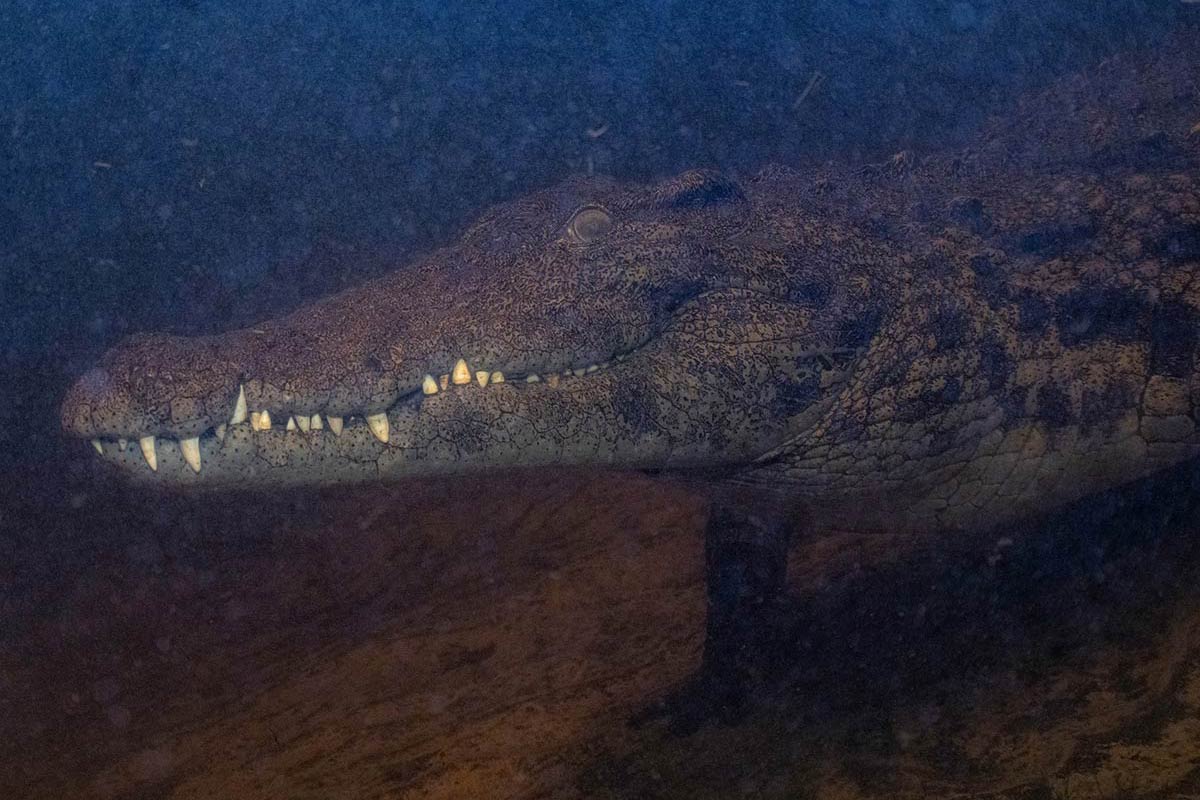
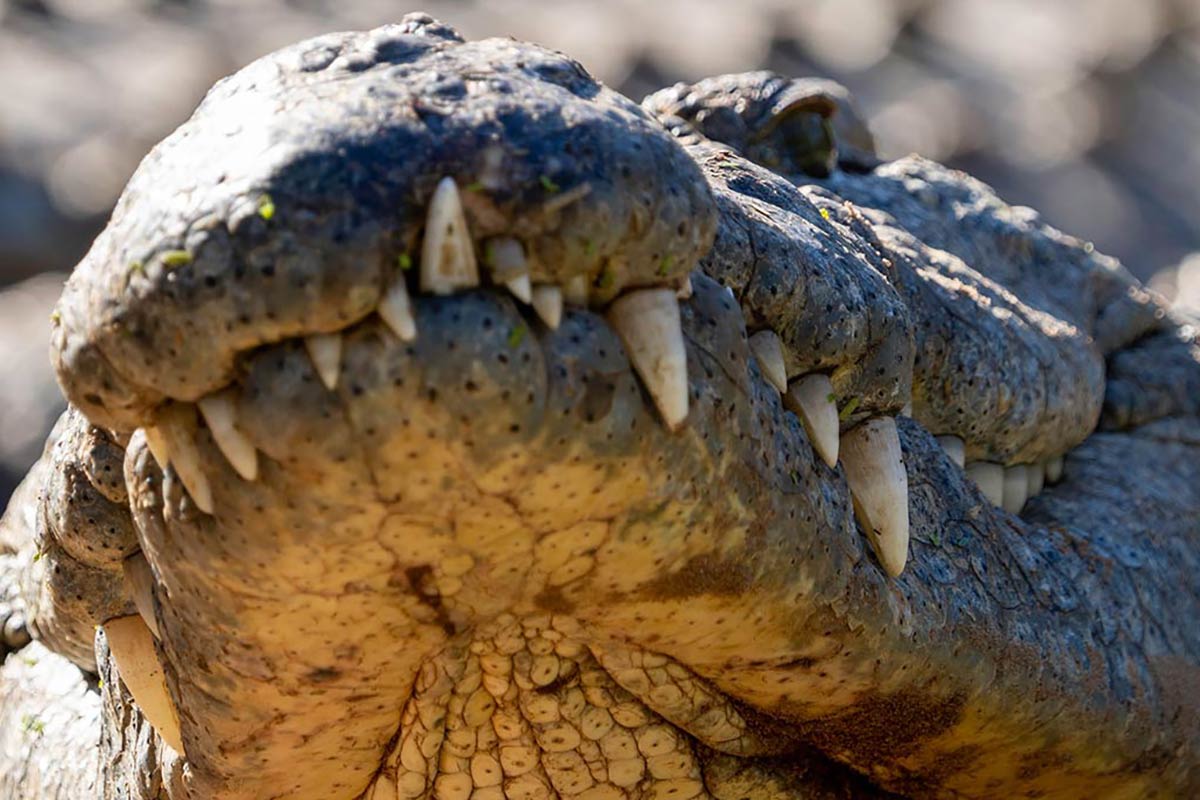
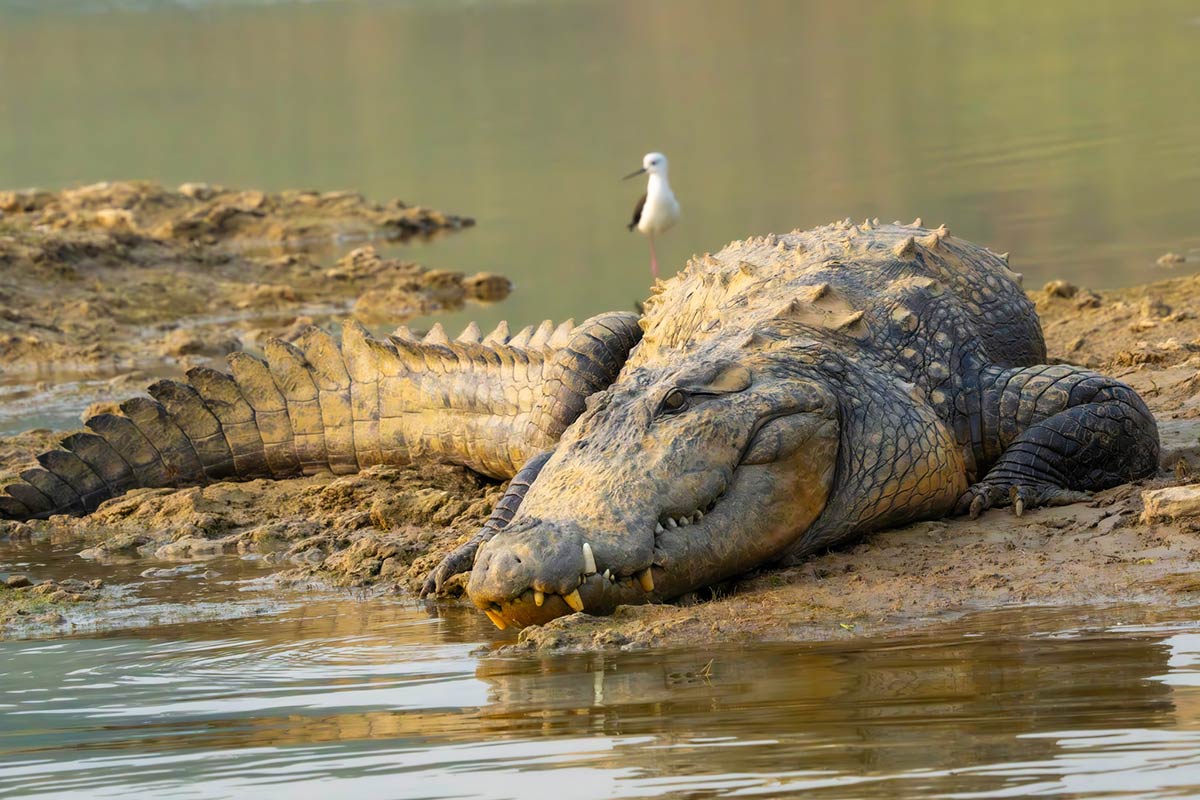
For me, Nile crocodile diving is far more than an adrenaline experience. It is a rare opportunity to enter the domain of one of Africa’s oldest and most misunderstood predators. It demands respect, preparation, and discipline, but for the right diver it offers an encounter that is as humbling as it is unforgettable. After years of operating in the Okavango Delta, I can say with confidence that diving with Nile crocodiles remains one of the most intense and extraordinary adventures I have ever undertaken.
Walter Bernardis
What’s Included
Your Okavango Delta Nile Crocodile Diving Expedition has been designed as a fully supported, small-group experience to ensure comfort, safety, and maximum time in the water.
The package includes all meals throughout your stay, along with six nights’ accommodation at Shekawe Fishing Lodge in en-suite rooms. All diving logistics are taken care of, including air fills, cylinders, and weight belts, allowing you to focus entirely on the experience.
Airport transfers from Maun to the lodge and back are included, as well as daily boat access for the five days of diving on the Okavango River. For added peace of mind, air rescue insurance is also provided in case of emergency.
Throughout the expedition, you will be guided by an experienced professional, with in-depth dive briefings, skills adaptation training, and continuous support both in the water and on the boat.
- All meals
- Accommodation
- Transportation throughout the expedition
- Cylinder and weight belt
- Professional dive supervision and safety briefings
Excludes
Flights to and from Maun are not included and must be arranged separately. Participants are required to have valid medical and diving insurance (such as DAN Gold or Silver level) prior to arrival.
Personal dive equipment is not included, so divers must bring their own gear suited to cold-water conditions. Alcohol is not provided, but guests are welcome to bring their own.
Any personal expenses, additional activities, or items not specifically listed in the inclusions are excluded from the package.
Nile Croc Diving Package 5 Day
Day 1 – Arrival & Transfer to Maun → Shekawe Fishing Lodge
Day 2 – First Crocodile Dive & Skills Adaptation
- Using the natural current to drift efficiently
- Maintaining correct body positioning for controlled movement
- Practicing safe entry and exit techniques with minimal surface exposure
- Evening debrief and dive planning
Day 3 – Advanced River Diving & Crocodile Encounters
Expect increased confidence in spotting crocodiles and understanding their behaviour patterns within the delta ecosystem.
Day 4 – Exploration & Underwater Photography Opportunities
Guidance will be provided on positioning and awareness to maximise both safety and visual encounters.
Day 5 – Peak Diving Experience & Close Encounters
Expect your closest and most memorable interactions with Nile crocodiles, while maintaining strict safety protocols under expert supervision.
Day 6 – Final Dive Sessions & Wrap-Up
The day concludes with a debrief, sharing experiences, reviewing footage or photographs, and preparing for departure.
Day 7 – Departure
Expeditions
- 5 July to 11th July - fully booked
- 26th July to 1st August
- 1st August to 7th August